Starting to run can feel intimidating especially if you have never been the ‘sporty type’, are lacking self confidence or you are coming back to fitness after having children. This beginner-friendly running plan is designed to help you build fitness gradually, avoid injury and most importantly, enjoy the process.
You might think you need expensive gear, a certain level of fitness, or the ability to run for miles without stopping. The truth is, none of that is necessary. Every experienced runner started somewhere, and the easiest way to become a runner is to take it one step at a time.
Why This Running Plan Works
One of the biggest mistakes beginners make is trying to run too far, too soon.
Running is a high-impact activity, and your muscles, joints and cardiovascular system all need time to adapt.
This plan uses a simple run/walk method that allows you to build endurance without feeling overwhelmed.
The goal isn’t to run fast.
The goal is to keep showing up.
Before You Start
You’ll only need a few essentials:
- A comfortable pair of running shoes (visit our buying guide: The Best Running Shoes for Women in 2026)
- Supportive sports bra (if needed)
- Comfortable workout clothes
- Water bottle
- A running app or stopwatch to time your intervals
Remember, pace doesn’t matter. If you can hold a conversation while running, you’re probably at the right speed.
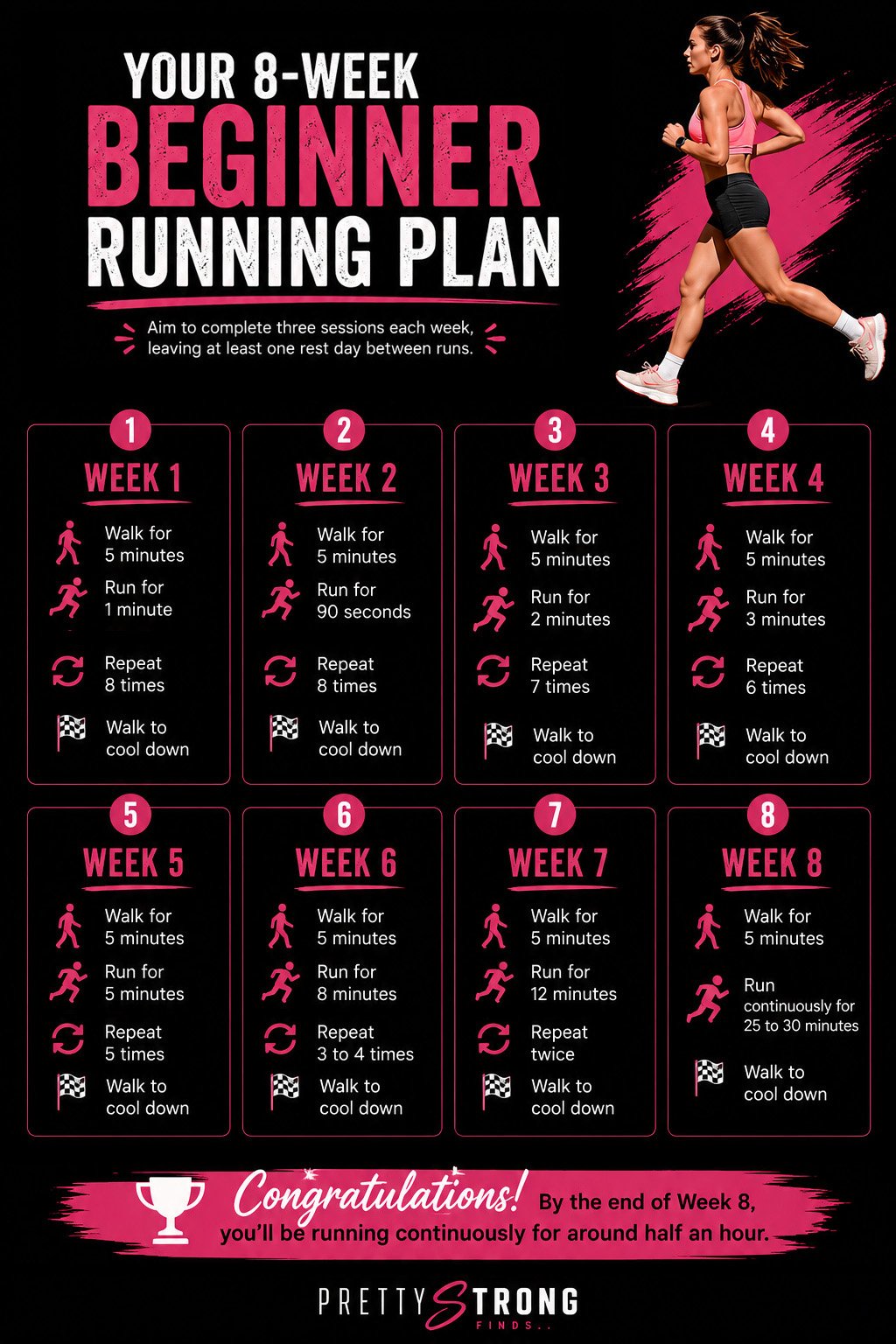
Your 8-Week Beginner Running Plan
Aim to complete three sessions each week, leaving at least one rest day between runs.
Week 1
- Walk for 5 minutes
- Run for 1 minute
- Walk for 2 minutes
- Repeat 8 times
- Walk for 5 minutes to cool down
Week 2
- Walk for 5 minutes
- Run for 90 seconds
- Walk for 2 minutes
- Repeat 8 times
- Cool down
Week 3
- Walk for 5 minutes
- Run for 2 minutes
- Walk for 2 minutes
- Repeat 7 times
Week 4
- Walk for 5 minutes
- Run for 3 minutes
- Walk for 2 minutes
- Repeat 6 times
Week 5
- Walk for 5 minutes
- Run for 5 minutes
- Walk for 2 minutes
- Repeat 5 times
Week 6
- Walk for 5 minutes
- Run for 8 minutes
- Walk for 2 minutes
- Repeat 3 to 4 times
Week 7
- Walk for 5 minutes
- Run for 12 minutes
- Walk for 2 minutes
- Repeat twice
Week 8
- Walk for 5 minutes
- Run continuously for 25 to 30 minutes
- Walk to cool down
Congratulations! By the end of Week 8, you’ll be running continuously for around half an hour.
What If You Need to Repeat a Week?
That’s completely normal.
Progress isn’t always linear, and everyone adapts at a different pace.
If a week feels too difficult, repeat it before moving on. Building fitness slowly is far better than rushing and picking up an injury.
Beginner Running Tips
Slow Down
Most beginners run too fast.
Running slower allows you to go further, recover more quickly and enjoy the experience.
Don’t Skip Your Warm-Up
A brisk five-minute walk before each run prepares your muscles and reduces injury risk.
Rest Days Matter
Fitness improves while you recover, not just while you’re exercising.
Aim for at least one rest day between running sessions.
Stay Consistent
Three runs every week will bring better results than one long run every now and then.
Consistency beats perfection every time.
Common Beginner Mistakes
Avoid these common pitfalls:
- Running every day
- Ignoring aches and pains
- Wearing worn-out shoes
- Comparing yourself to experienced runners
- Trying to run too fast
- Skipping recovery
Remember, every runner progresses at their own pace.
What Should You Wear?
Comfort is key.
Choose moisture-wicking clothing that keeps you cool and dry.
Look for:
- Comfortable running shoes (visit our buying guide: The Best Running Shoes for Women in 2026)
- High-support sports bra
- Breathable leggings or shorts
- Lightweight running top
- Running socks designed to reduce blisters
Good kit won’t make you faster overnight, but it can make running much more comfortable.
How to Stay Motivated
Some days you’ll feel amazing.
Other days you’ll want to turn around after five minutes.
Both are part of the journey.
Try these simple tricks:
- Tick each run off on a calendar.
- Create a motivating playlist or podcast queue.
- Celebrate consistency instead of pace.
- Invite a friend to join you.
- Remember why you started.
Every run is another step towards becoming fitter and stronger.
Frequently Asked Questions
Is walking during a run cheating?
Not at all. Walking breaks are one of the best ways to build endurance safely and are used by many experienced runners.
How fast should I run?
Run at a pace where you could still hold a conversation. If you’re gasping for breath, slow down.
Can I run on a treadmill?
Absolutely. This plan works just as well on a treadmill as it does outdoors.
What if I miss a week?
Simply repeat the previous week rather than trying to catch up. Consistency matters more than sticking rigidly to a schedule.
Final Thoughts
Running doesn’t have to be complicated.
Forget worrying about speed, distance or expensive gear. Focus on building the habit of getting out the door three times a week.
With patience and consistency, you’ll soon be running farther than you ever thought possible.
The first step is always the hardest, but it’s also the one that changes everything.